http://www.cryptomundo.com/wp-content/uploads/the-capybara.jpg
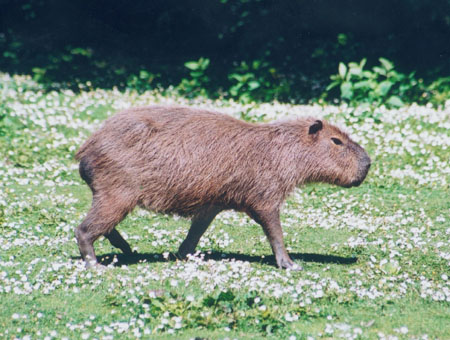
This is a capybara, the largest living rodent and native to South America. I could tell you how it has brown/grey fur and a short, elongated snout like a guinea pig, and long hoofed legs like a piglet, but would the picture you form in your mind really match up with what what the picture shows a capybara to really be like. You may have your own idea, but as they say, a picture is worth a thousand words.
I do believe that one cannot just study words when they are studying history. We may be reading texts and analyzing them, but we are really just seeing the world through the eyes of books during a particular time period. To really transport ourselves to that time, a time so very different from our very own, we need to enlist the help of some visual aids. There was a different structure and way of life in those days, and there is nothing today that can really compare. Taking an image into account can make all the difference. Try describing an oil lamp when all of our lighting today come from incandescent or florescent bulbs. Knowing the difference between these two types of lighting can change a well-lit room into a darkened and more mysterious one. Subtle details like lighting and fashion can really change the meaning of a story if one knows what the things described really look like. If you know what a thing in the text is and how it was used during that time period, you will have a greater understanding of what is going on as well as the connotation that comes along with that item.
Pictures can really help in my understanding of texts from a different time period. Life was so different from how it is today and images from the past can transport me to that time. Before I set out on a text from a different era, I always look up an image. Like a window, it transports me to that time and prepares me for the journey that the text details.
Until next time adventurers,
Emilie